
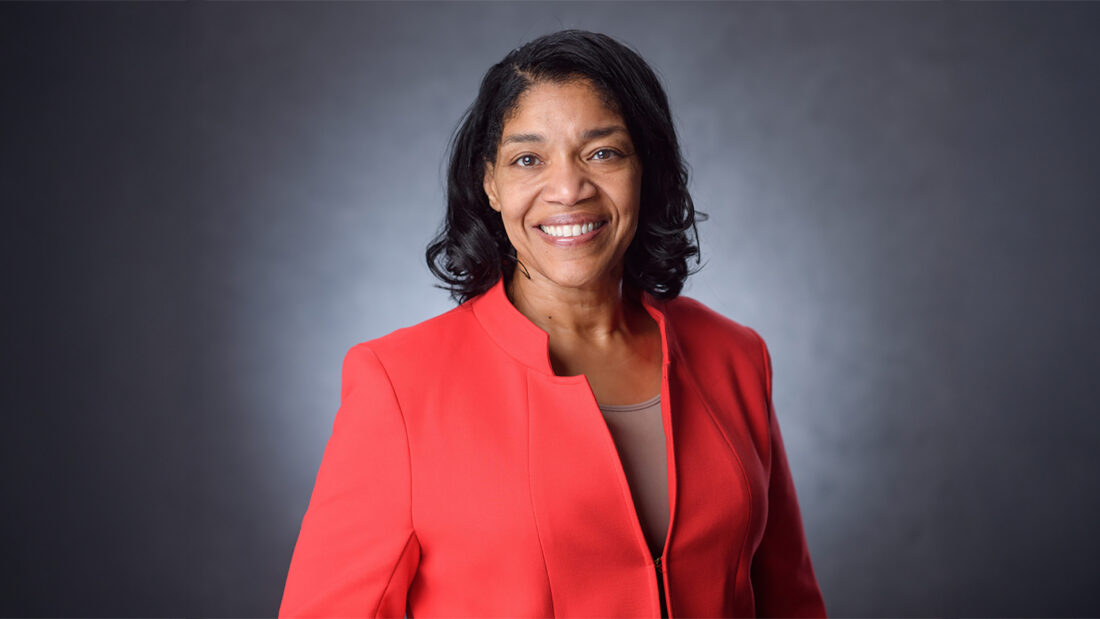
Guest Column by Dr. Quentina Timoll, Superintendent
For decades, the debate around school choice has largely focused on geography. It has been a conversation about ZIP codes, charter lotteries, and open enrollment policies—essentially, a debate about which building a child should walk into every morning and what that school might offer to the child either short-term or long.
But for a growing number of families, the most empowering choice isn’t about finding a better building or even a better ZIP code. It is about removing the walls entirely. As we move further into a post-pandemic era, it is time to stop viewing virtual education as a temporary stopgap or a “Plan B” and start viewing it as the lifeline it can be. True school choice isn’t about forcing every child into the same system—it’s about building systems flexible enough to meet students where they are, academically, emotionally, and physically.
For thousands of students, the virtual option is not just a valid education alternative. It is the ultimate form of school choice. It offers the only environment capable of truly customizing education around the three most critical barriers to student success: health, pacing, and safety.
First, consider the student with complex medical needs. For a child navigating chronic illness, autoimmune disorders, or rigorous physical therapy schedules, the rigid 8:00 a.m. to 3:00 p.m. bell schedule is an insurmountable obstacle. In a traditional setting, these students are often penalized for their biology, accumulating absences and missing instruction simply because they need to care for their bodies. Virtual schooling flips this dynamic. It allows education to wrap around the student’s health needs, rather than forcing the student to sacrifice health for attendance. In the virtual model, a hospital stay does not mean falling behind; it just means logging in at a different time and maybe a different location.
Second, virtual education dismantles the “assembly line” model of academic pacing. In a brick-and-mortar classroom, a teacher must inevitably teach “to the middle.” Students who grasp concepts quickly are often told to wait, while those who need more time are forced to move on or keep up before they have mastered the concepts. This “one-speed-fits-all” approach breeds boredom for the gifted and discouragement for the struggling.
Virtual schools and micro academies allow students to break free from these shackles. An accelerated learner can complete Algebra I in a single semester and move immediately to Geometry, staying engaged and challenged. This idea isn’t focused just on convenience. It is academic personalization in its purest form.
Finally, and perhaps most urgently, virtual school provides immediate safety for those escaping the toxicity of bullying and other social pressures. We often tell bullied students to “ignore it” or “report it.” However, the reality is that for many, the physical school building has become a place of trauma that many students cannot escape. You cannot learn when your brain is in fight-or-flight mode. For these students, virtual school is not a retreat. Instead, it is a rescue operation. By removing the physical proximity of trauma, we reopen their capacity to learn. We have seen time and again that when a child feels safe, their grades improve, their attendance stabilizes, and their love for learning returns.
Critics often argue that virtual schooling lacks “socialization.” As a result of this argument, University View Academy (UVA) introduced the launch of its Micro Academy model during last year’s National School Choice Week. The Micro Academy serves as a direct response to requests from our students, parents, and educators to increase student engagement and social interaction and provide additional learning coach support which supports the academic success of our students. The Micro Academy provides hybrid learning opportunities for UVA students.
Since last January’s launch, UVA has experienced tremendous Micro Academy growth. The number of Micro Academy locations has doubled while the number of students participating has increased about 300%, clearly demonstrating that the model was a welcome addition for families. Our Micro Academies exist because families asked for something more—more connection, more support, and more flexibility without sacrificing academic rigor. We listened to these requests and created a model that proves that virtual education and meaningful social engagement are not mutually exclusive.
As we celebrate National School Choice Week, we are reminded that true school choice means acknowledging that a desk in a classroom is not the gold standard for every child. By protecting and expanding virtual and hybrid options, UVA acknowledges a fundamental truth: education should fit the child, not the other way around. At UVA, students have a choice. Now is the time to check out what we have to offer. Enrollment for the 2026-27 school year opens in February.